

The Yellow Rose Story in Tennessee
In August 1920, Tennessee became the decisive state in the fight to ratify the 19th Amendment, which would give women the right to vote. The movement was so close that only one more state needed to say “yes” to make it the “Perfect Thirty-Six”.

The “War of the Roses”
At the Tennessee General Assembly, lawmakers wore roses on their lapels to show their stance:
- Yellow roses = Suffragists (supporters of women’s suffrage)
- Red roses = Anti-suffragists (opponents)
Yellow roses were adopted by Tennessee suffragists as a symbol of hope and purity, echoing the colors of the National American Woman Suffrage Association. They were worn during parades, carried on banners, and pinned on legislators who supported the cause. Red roses, by contrast, were the anti-suffragists’ emblem.
The morning of the vote, Harry T. Burn, a 24-year-old Republican state representative from Niota Tennessee, received a 7-page letter from his widowed mother, urging him to “Hurrah and vote for suffrage” and to “help Mrs. Catt”. Prior to the vote, Burn’s mentor gave a racist anti-suffrage speech which motivated his mother to send him a letter.
Her letter was about family news and some political advise. On the final page she urged him to vote in favor of the ratification. Influenced by her advice, Burn changed his mind, cast his vote for the amendment, and pinned on a yellow rose in victory.
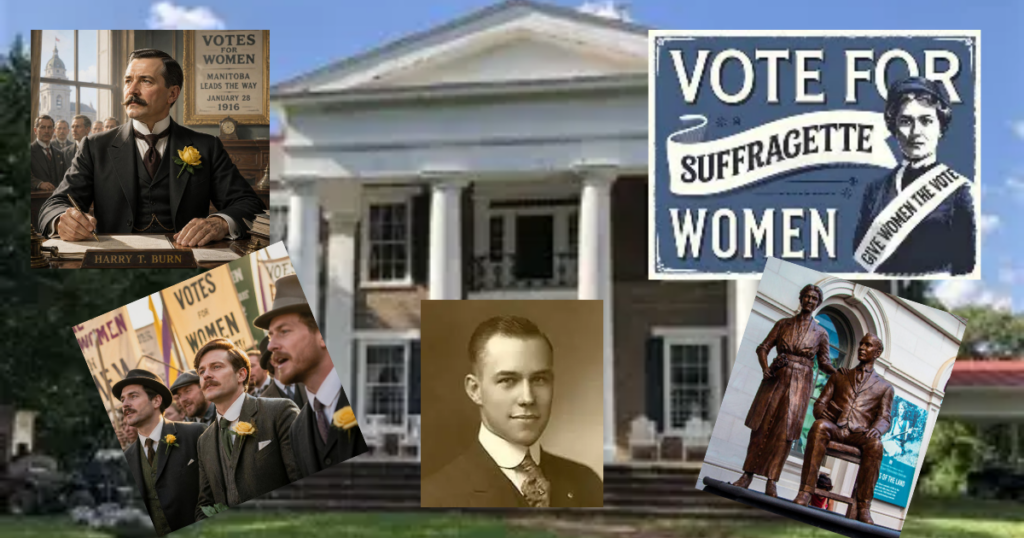
When Harry T. Burn flipped his vote, suffragists celebrated with yellow roses thrown into the air. The amendment passed, and Tennessee became the 36th state to ratify, securing women’s right to vote nationwide.
The “yellow rose” became a lasting symbol of the suffrage movement in Tennessee. While in the language of flowers yellow often means “friendship” or “loyalty,” in this context it represented hope, courage, and the triumph of equality. The story is now part of Tennessee’s history, remembered in museums, monuments, and even in the state’s “War of the Roses” narrative.
In short: The yellow rose in Tennessee’s suffrage story is more than a flower — it’s a badge of hope, a sign of unity, and the emblem of a historic victory that changed American democracy. Plus, Tennessee has named every August 18, the day of the vote, Febb Burn Day!